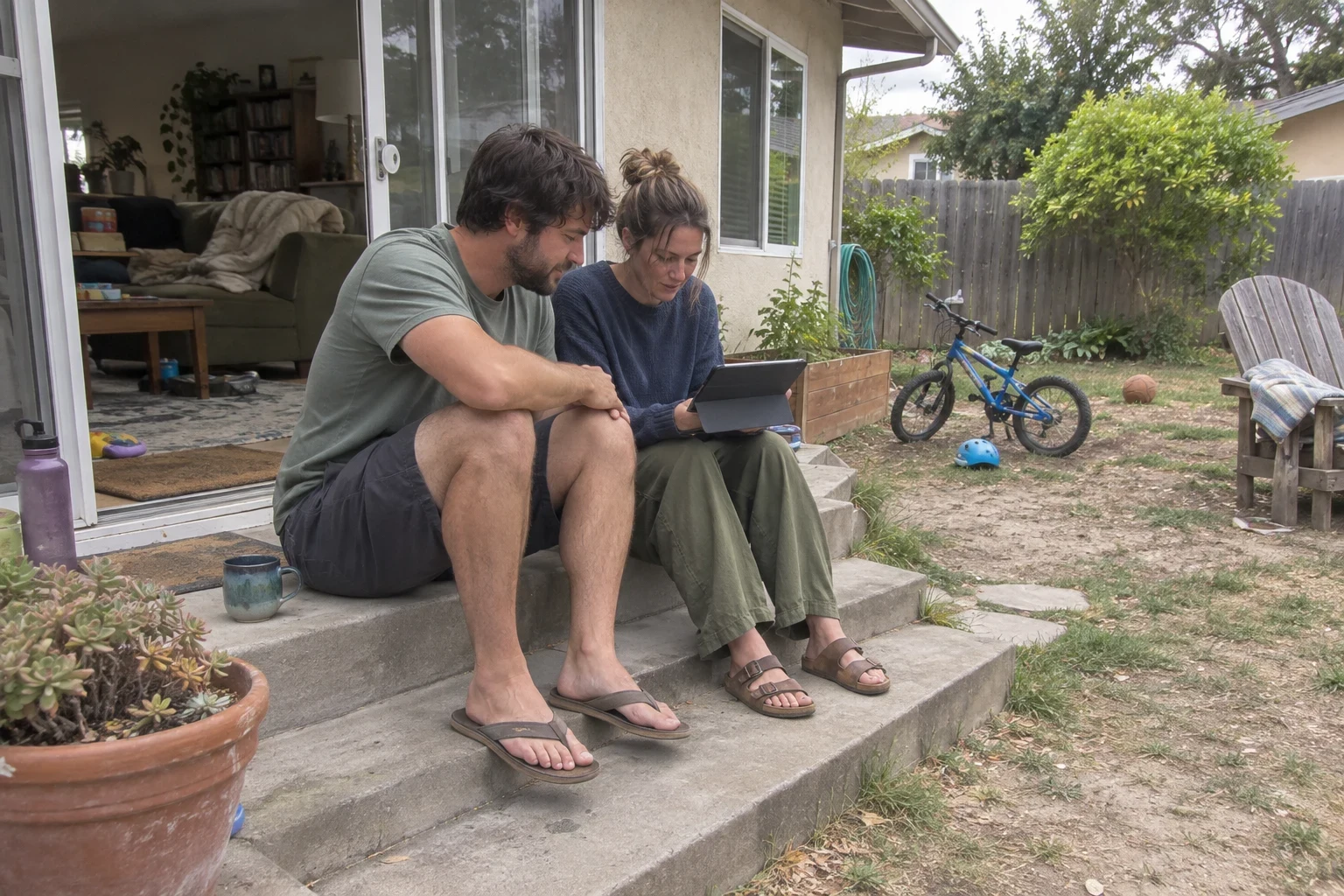
Los Osos, CA
Find Life Cover Worth Keeping Up for Decades in Los Osos, CA
Answer a few short questions through our short form and weigh term life and whole life options with the later years in mind: a premium that stays manageable, a beneficiary kept current, cover that stays in force. People in Los Osos, CA use it, along with nearby towns such as Morro Bay and San Luis Obispo.
- Free to use
- No purchase required
- Term or whole life
- Go at your own pace
Coverage options for Los Osos families
Answer six short questions and a licensed agent will follow up with options that fit your situation.
- Takes about two minutes
- No obligation to buy
- Your details stay private
Free, no obligation
See your coverage options
Six short questions. About two minutes.
From First Answers to a Policy You Keep
Getting life insurance tends to move in the same order for most people. Below is what each stage usually involves and what it needs from you.
- 1
A few short questions
You fill in some basics through our short form, about two minutes of your time. That covers the amount you have in mind, the person you would name as beneficiary and the best way to reach you.
- 2
A licensed agent follows up
An agent licensed in California who covers your town contacts you with options shaped by your answers. Ask anything, set term life beside whole life, and take whatever time you need.
- 3
The application
Should you choose to apply, expect health questions and sometimes a medical exam. Certain policies are offered with no exam at all, and those tend to carry a higher price or a smaller amount of cover. Once everything is in, the insurer reviews your file and reaches its own decision.
- 4
Looking after the policy
When the policy arrives, read it through and store it where your family can reach it. In the years after, people commonly confirm the beneficiary is still the right person and keep premiums paid on schedule, so the cover lasts as long as intended.

Two Kinds of Life Policy, Chosen With the Years in Mind
Term life runs for a fixed stretch of years, perhaps the life of a mortgage or the time children live at home, and stops when that stretch ends. Whole life is built to stay with you for life and gathers cash value along the way; the agent who contacts you can walk through how that part of the policy works. Many people ask two questions at once: which kind suits today, and which one they could keep paying for as long as the need lasts. The Term Life Insurance and Whole Life Insurance pages cover each in more depth.
Term Life Insurance
Cover for a set number of years, often matched to a mortgage or to the years when children are still at home.
Whole Life Insurance
Coverage meant to stay in place for life, with cash value built in, and the questions worth putting to an agent before you choose a policy.
About Life Insurance Los Osos
Using Life Insurance Los Osos costs you nothing. Your answers go to a licensed life insurance agent in California who covers your town, and from then on that agent leads the conversation. We are not an insurance company, and we are not an agent either. Selling, pricing and issuing a policy all happen elsewhere, never with us.
The service rests on one plain belief: the best time to ask how a policy will wear over the years is before you sign for it. So we keep the explanations simple, leave the timing to you and point attention at the small things that keep cover sound later, such as a beneficiary line that is filled in clearly and a premium your budget can still manage long after the first year.
What Moves the Price of a Life Policy
Every policy is priced on its own, yet the reasons behind the price repeat from one person to the next. Insurers weigh a short list of facts about you and about the cover you have in mind. Seeing that list early makes it easier to understand why two options can cost quite different amounts.
Prices, cover and approval all rest with the insurance company, and we have no say in any of them. Whatever figures reach you later are worked out by the insurer from the factors above.
- Your age
- The age you are on the day the policy begins carries a lot of weight. Because the price is fixed from that starting age, many people look at cover well before it feels pressing.
- Your health
- Expect questions about how you are now and about past medical history. Some insurers also ask for an exam, and what they learn can push the price in either direction.
- Tobacco use
- Insurers ask about smoking and other tobacco plainly, and using it generally makes cover cost more. Give exact answers, since the policy stands on what the application says.
- The amount of cover
- More cover costs more to carry. Sizing the amount to the job the money has to do keeps the premium in step with the real need.
- Length of the term
- With term life, each extra year of cover usually adds to the premium. People often set the term to match a mortgage or the years children live at home.
- Kind of policy
- For the same amount, whole life generally costs more than term life, since it is built to last a lifetime and carries cash value. That gap is one of the main points people weigh.
How We Keep the Long Run in View
A policy proves its worth over decades, not in its first few weeks. Everything here leans toward cover you can keep, rather than cover you outgrow or let lapse.
A premium you can carry later
The first bill is only the start. People commonly ask how the premium will sit in their budget ten or twenty years on, and whether it stays level. Those questions come up early here, before any choice is made.
Plain words for policy terms
Beneficiary, premium, term, cash value. We explain each in ordinary language so you can read your own policy later without a glossary beside you.
Time set by you
There is no clock running on any of this. Look at your options, put them down for a week or a month, and return to the conversation whenever it fits your life.
Upkeep planned from the start
A policy needs a little tending. Beneficiaries change after a marriage, a divorce or a new child, and premiums have to keep being paid for cover to stay in force. We keep those later steps in view from the first question, so they never come as a surprise.
Questions People Ask Before Choosing Cover
What do people usually buy life insurance for?
Most often to replace income the family relies on, to pay off a mortgage, to cover children's costs as they grow, to handle funeral costs or to leave money to family. Many people have more than one reason. Naming yours first tends to make the kind and amount of cover easier to settle.
How much coverage do people usually look at?
A common rule of thumb is several years of income plus debts, and it is a rule of thumb, not advice for you. As an example only: Census figures for Los Osos (American Community Survey, 2023) put median household income at $103,504 and median home value at $728,000, and 70% of homes are lived in by their owner. A household earning that median and carrying a mortgage would, by the rule of thumb, start from several years of that income and then add what is still owed on the home. Your own figures, and the choice, are yours to work through.
Is a life insurance payout taxed?
Under federal law, a payout to a named beneficiary is generally not taxed as income. Tax rules depend on each situation, so ask a tax adviser about your own case. Naming the beneficiary clearly on the policy, and keeping that name current, helps the money reach the person you intend.
What if I change my mind after buying a policy?
Each policy includes a free-look period lasting at least 10 days. Cancel during that stretch and you are entitled to a refund. The precise number of days is printed in the policy. Many people spend that time reading slowly and checking that the names, the amount and the term match what they expected.
Do I have to buy anything after answering the questions?
No. There is no obligation to buy. You can look at the options, ask questions and decide not to go ahead, or come back to it months later.
I already have a policy. Can I still look at options?
Yes. Many people begin by listing what they already hold, such as cover through an employer or an older policy, and then look only at the gap. Note your current cover in your answers so the conversation starts from what is in place. Holding on to a policy that still does its job is often the sensible part of the picture.
Where We Connect People With Coverage
We serve people in Los Osos and nearby towns, including Morro Bay, Cayucos, San Luis Obispo, Atascadero, Pismo Beach and Grover Beach. The same few questions start things off in every town, and the options you see are shaped by your answers rather than your street.
- Los Osos
- Morro Bay
- San Luis Obispo
- California Polytechnic State University
- Cayucos
- Pismo Beach
- Atascadero
- Grover Beach
The Service Areas page lists each town we cover. Wherever you live, you can begin from home on your own schedule.
Set Up Cover You Can Keep for Years
The first questions take about two minutes, and you can stop there to think it over. From that point, take the time you need to weigh your options.